

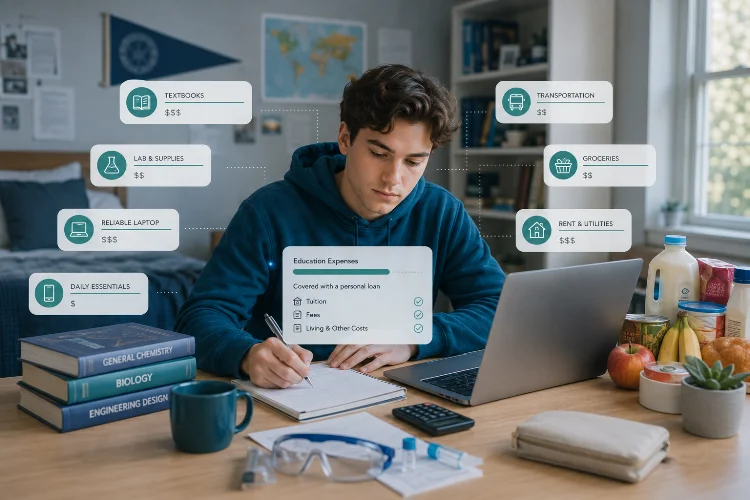
College expenses do not stop when the tuition bill is paid. Students may still need textbooks, laboratory materials, a reliable laptop, transportation, groceries, rent, and plenty of smaller items that quickly add up. That is where personal student loans, more commonly called private student loans, may become useful.
These loans can help close a genuine funding gap, but they are not free spending money. The amount borrowed normally has to be repaid with interest, and private loans may provide fewer protections than federal financial aid.
Before applying, it is worth understanding what the money can cover, how approval works, and how much debt your future budget can realistically handle.
College Costs Go Beyond Tuition
Federal Student Aid explains that education costs may include housing and food, books and supplies, transportation, and other school-related expenses. A reasonably necessary computer may also be included in a school’s estimated cost of attendance.
Consider a student who travels to campus three days a week. Besides tuition, that student may need to pay for gas, parking, online course codes, printing, laboratory equipment, and specialist software.
Each expense may look manageable on its own. Together, however, they can create a serious financial shortfall during the semester.
What Is a Personal Student Loan?
The phrase “personal student loan” is often used informally to describe a private education loan. These loans come from banks, credit unions, state programs, schools, and other private lenders rather than the federal government.
Approval requirements, interest rates, and fees may depend on the lender and the applicant’s credit history. Private loans also do not automatically include the same repayment flexibility and borrower protections available with federal student loans.
The loan is generally intended for education-related expenses. Depending on the lender and school certification process, it may help pay for tuition, books, housing, meals, transportation, or required equipment.
What Can the Loan Cover?
Private education financing may be used for a laptop, course software, laboratory fees, textbooks, rent, food, commuting costs, and other reasonable expenses connected to college.
However, this does not mean a student can borrow an unlimited amount. The maximum may be restricted by the school’s calculated cost of attendance minus scholarships, grants, federal loans, and other financial aid.
Some lenders send the loan money directly to the school. After the institution deducts tuition and other billed expenses, any remaining balance may be released to the student.
Ask your financial aid office how certification and disbursement work before making purchases or signing a rental agreement.
Credit Checks and Co-Signers
Private lenders commonly review an applicant’s credit and financial history. Since many college students have limited income or a short credit record, a co-signer may be required.
Adding a creditworthy co-signer may also help a student qualify for a better interest rate. However, the co-signer is not simply providing a character reference. That person becomes legally responsible for the debt if the student does not pay.
Late or missed payments may affect both credit records. Some lenders offer co-signer release after certain requirements are met, but the conditions vary and should always be confirmed in writing.
Explore Federal Financial Aid First
Complete the FAFSA and review grants, scholarships, work-study, and federal student loans before turning to a private lender.
Federal loans generally have fixed interest rates and provide more flexible borrower protections than most private products. Private borrowing is normally better treated as a tool for filling a remaining gap rather than the first source of college funding.
Work-study income can also help cover food, transportation, and school supplies. Even a modest campus job may reduce the amount that has to be borrowed.
Borrow Only What You Really Need
Create a simple semester budget before applying. Add your expected college expenses, then subtract grants, savings, employment income, family contributions, scholarships, and federal aid.
The remaining amount is the funding gap you may need to cover. Avoid automatically accepting the maximum loan offered by a lender.
A loan may help purchase a necessary computer, but it should not become an excuse to buy the most expensive model available. The same idea applies to housing, food, and transportation.
Remember that interest means a $1,000 purchase can cost noticeably more by the time the debt is fully repaid.
Read the Repayment Terms Carefully
Private repayment rules differ from one lender to another. Some loans require immediate or interest-only payments while the student is enrolled. Others allow payments to be postponed until after graduation or until the student leaves school.
Postponing payments may make college life easier, but interest may continue accumulating during that period. Hardship assistance, deferment, and forbearance options also depend on the individual lender.
Compare the annual percentage rate, fixed or variable rate, fees, repayment period, estimated monthly payment, and total projected cost.
A smaller monthly bill is not necessarily cheaper if it extends the repayment period by several years.
Personal student loans may help when scholarships, savings, work income, federal aid, and family support still leave a genuine college funding gap. They can potentially cover books, housing, transportation, food, software, laboratory costs, and required technology, but the money must be managed carefully.
Begin with a realistic budget, explore federal options first, and compare several private lenders instead of accepting the first offer. Review the interest rate, co-signer responsibilities, disbursement process, and repayment terms closely. Most importantly, borrow only what is necessary to stay enrolled and complete your education. Speak with your financial aid office before submitting an application.