

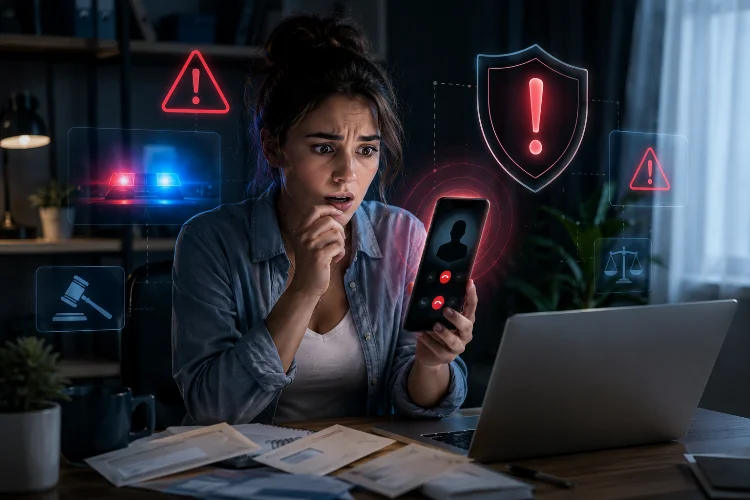
Getting a call about an unpaid payday loan can be unsettling. It becomes even more frightening when the caller claims that police officers are on the way, a lawsuit has already been filed, or you must pay within the next hour to avoid arrest.
That pressure is exactly how a payday loan debt collection scam often works. The caller wants you to panic before you have time to check whether the debt, collection company, or legal threat is real.
Some scammers even know your name, address, former employer, or part of your Social Security number. Personal information can make the story sound convincing, but it does not prove that the debt exists. Before sending any money, slow down, ask questions, and verify everything independently.
What Is a Fake Payday Loan Collection Scam?
In this type of scam, someone pretends to represent a lender, collection agency, law firm, or government department. The caller claims that you owe money from an old payday loan and demands immediate payment.
The debt may be completely invented. In other cases, the scammer may use details from a loan application that was started but never completed.
The Federal Trade Commission has warned about phantom collectors who claimed people owed payday loans and threatened arrest, jail, or lawsuits unless they paid immediately. Some callers also possessed sensitive personal information, making their stories appear more believable. ng Sign One: Threats of Immediate Arrest
A caller may say that police officers will arrive at your home or workplace unless you pay within a few minutes. They may also accuse you of check fraud, internet fraud, or theft.
These threats are major warning signs. A debt collector cannot have you arrested simply because you cannot pay an ordinary consumer debt. Arrest may become an issue only in unusual situations involving failure to comply with a court order, which is very different from a collector ordering police to arrest you over the phone. nfuse a threatening phone call with a genuine court summons. Real legal documents should not be ignored, but a caller cannot create a criminal case simply by saying one exists.
Warning Sign Two: Pressure to Pay Immediately
Scammers rarely want to give you time to think. They may demand payment through a debit card, wire transfer, gift card, payment app, cryptocurrency, or direct withdrawal from your bank account.
The urgency is intentional. Once the payment is sent through a difficult-to-reverse method, recovering the money may be challenging.
A legitimate collector should allow you to review information about the alleged account. If the caller says the offer disappears when you hang up, treat that pressure as a reason to stop the conversation rather than a reason to pay.
Warning Sign Three: Refusing to Identify the Company
Ask for the caller’s full name, the collection company’s legal name, its mailing address, telephone number, and the name of the original creditor.
A scammer may refuse, change the subject, become abusive, or provide an official-sounding name that cannot be independently verified. Some may pretend to work for a law-enforcement office or law firm.
Do not trust the telephone number displayed on caller ID. Caller ID information can be manipulated, so look up the organization through an independent source rather than calling back using information supplied by the caller.
Ask for a Debt Validation Notice
A debt collector generally must provide validation information during the initial communication or within five days. That information should include details such as the creditor’s name, the amount claimed, and instructions for disputing the debt. caller to send this information in writing. Do not confirm sensitive details, provide bank information, or make a small “good faith” payment just to stop the calls.
After receiving validation information, consumers generally have 30 days to dispute the debt in writing. Requesting verification can help determine whether the account belongs to you and whether the collector has authority to collect it. y the Debt Independently
Check your records for the lender’s name, loan amount, deposit date, repayment history, and account number. Search your bank statements to see whether you ever received the loan being discussed.
When you recognize the original lender, contact it through the telephone number or website shown in your own records. Ask whether the account was sold or assigned to a collection agency.
Do not use contact details supplied by the suspicious caller. A scammer can create a fake website, email address, or customer service number that supports the same story.
What to Do During the Call
Stay calm and avoid arguing. Write down the date, time, telephone number, company name, amount demanded, payment method requested, and exact threats made.
Tell the caller that you will not discuss payment until you receive written validation. Then end the call if the person becomes abusive or refuses to provide basic information.
The Fair Debt Collection Practices Act prohibits covered debt collectors from using harassment, deception, or abusive tactics. False claims of being an attorney, threats of arrest, and threats to take actions that cannot legally be taken may violate federal collection rules. t Suspicious Collectors
A suspicious collection attempt can be reported to the FTC through ReportFraud.ftc.gov. You may also submit a debt collection complaint to the Consumer Financial Protection Bureau and contact your state attorney general. telephone numbers, voicemails, emails, payment instructions, company names, and copies of written messages. Even when you did not lose money, your report may help investigators identify a wider pattern.
A payday loan debt collection scam depends on fear, confusion, and urgency. The caller hopes that threats of arrest or legal action will make you pay before checking the facts.
Do not send money simply because someone knows personal details about you. Request written validation, contact the original lender independently, document every interaction, and report suspicious activity to the appropriate agencies.
At the same time, never ignore a genuine summons or court order. The safest response is to separate a real legal notice from an aggressive telephone threat and verify the debt before making any payment.